What does a kilo of food that is never eaten really cost?
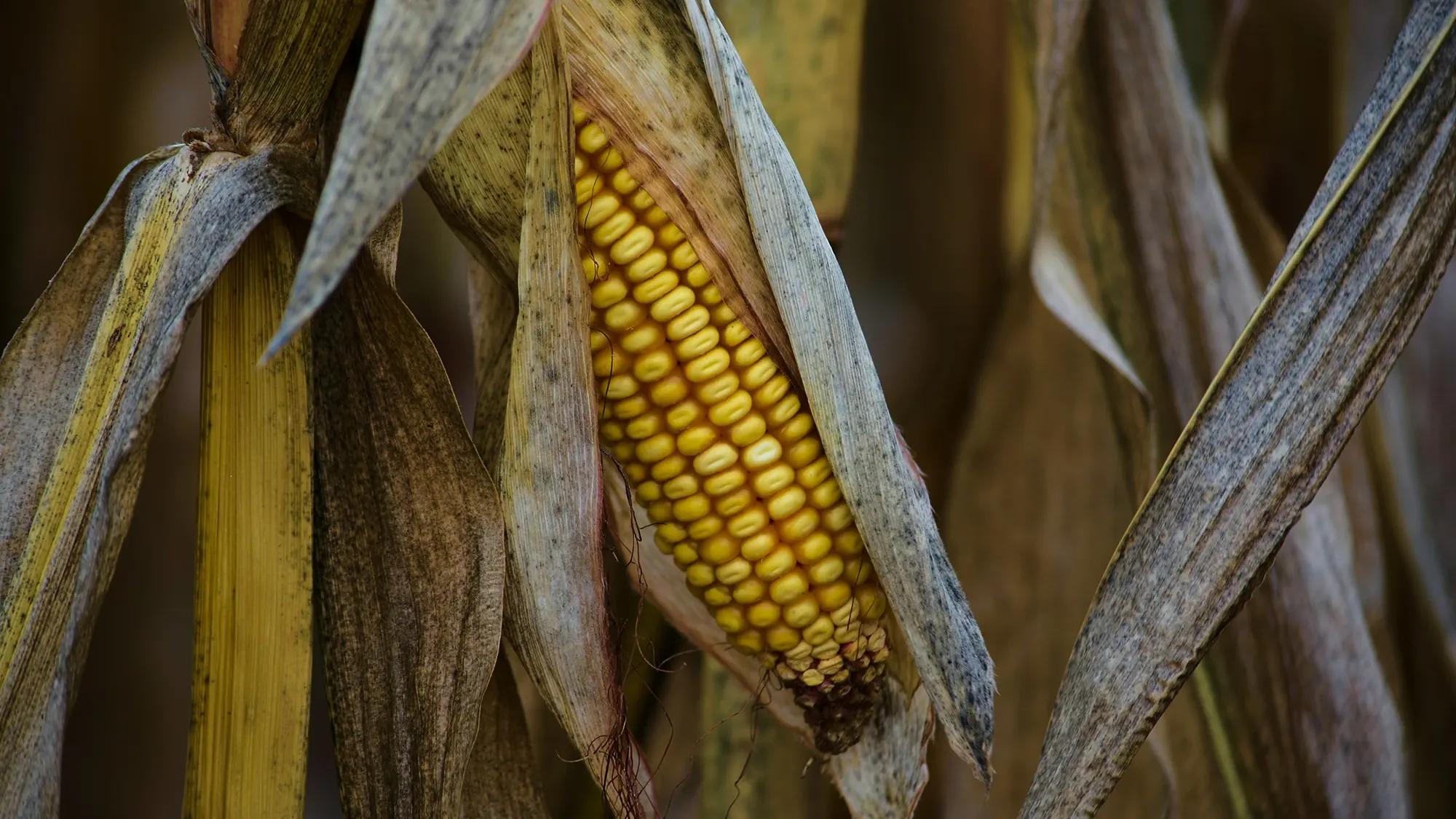
Imagine a kilo of tomatoes.
Behind it there is water, energy, fertiliser, labour, transport and a long chain of decisions. Now imagine that kilo is never eaten.
What has really been lost?
Much more than food.
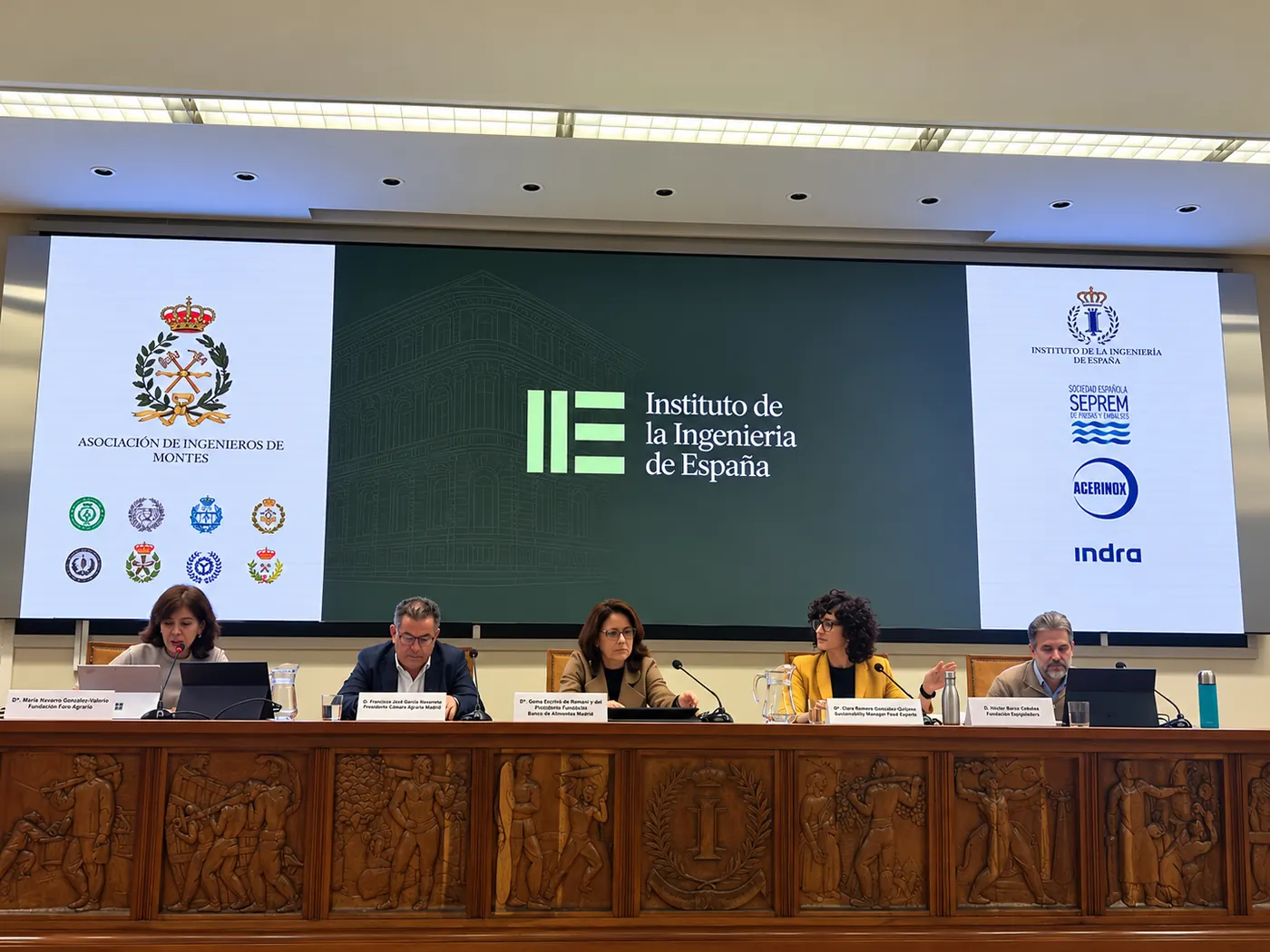
This reflection sums up one of the key messages from the event «Sistemas agroalimentarios y cadenas de suministro sostenibles» (Sustainable agrifood systems and supply chains), held on 19 October in Madrid and organised by Fundación Foro Agrario, Instituto de la Ingeniería de España and Asociación Nacional de Ingenieros Agrónomos.
Food Experts took part to contribute a fundamental perspective: sustainability needs data that turns good intentions into concrete decisions.
From field to supermarket: different perspectives, one shared challenge
Sustainability does not belong to a single link in the food chain.
It starts long before a product reaches the supermarket and continues even after we buy it.
And that big-picture view was precisely one of the event's great strengths.
First stop: where it all begins, agriculture
Eduardo de Miguel, from Fundación Global Nature, presented new methodologies applied to regenerative agriculture projects, while Soledad de Juan, from Fundación Antama, focused on the role of biotechnology and science in moving towards more sustainable and productive agriculture.
Two perspectives that showed how innovation in the field can take very different forms while pursuing a shared goal: producing better, using resources more efficiently.
Second stop: industry and retail also have a lot to say
Trinidad Márquez, from Federación Española del Vino, presented the Sustainable Wineries for Climate Protection programme, an initiative that shows how a sector can make progress through specific commitments and tools.
Óscar Hernández, from Calidad Pascual, addressed the future of food from the perspective of sustainability and health.
Alejandro Martínez Berriochoa, from Eroski, completed the picture from the retail side, explaining the company's environmental guarantees and its commitment to driving more sustainable consumption.
Different sectors. Different responsibilities. One shared challenge.
Because a supply chain can only be truly sustainable when every link moves forward.
The question that changes the conversation: what if we already had the data to do better?
The final part of the event brought different perspectives together in a round table on sustainability in supply chains and consumption, moderated by María Navarro, from Fundación Foro Agrario.
Francisco José García Navarrete, president of Cámara Agraria de Madrid, presented the Día de Mercado initiative.
Gema Escrivá de Romaní, president of Fundación Banco de Alimentos de Madrid, spoke about the importance of fighting food waste through food banks.
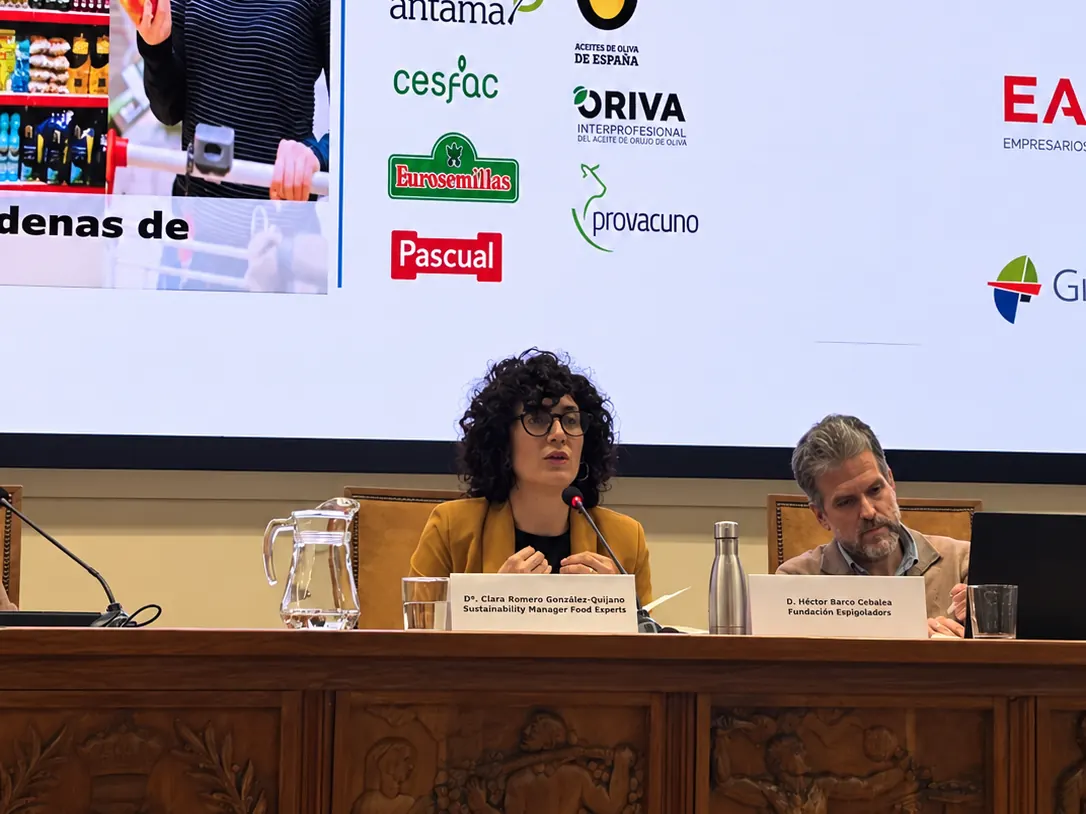
Héctor Barco, from Fundación Espigoladors, set out the challenge of moving towards a future without food loss.
And Clara Romero, Sustainability Manager at Food Experts, raised an essential question:
How can we know whether we are improving if we don't know our starting point?
Clara Romero, Sustainability Manager at Food Experts
Because talking about sustainability matters.
But knowing exactly where the impact occurs, what is causing it and how to reduce it is what turns words into results.
Data shouldn't stay in a report. It should go back to the field.
This was one of the central ideas Clara Romero put forward during her talk.
At Food Experts, we work to make sure environmental information is not just a set of indicators that companies collect to meet their obligations.
We want data to support decisions. Especially for those at the start of the chain: growers.
With Life Cycle Assessment (LCA), it is possible to calculate a product's environmental impact by season and by grower.
This makes it possible to answer much more specific questions:
- Where in the production process is the greatest environmental impact concentrated?
- How does a product's footprint change from one season to the next?
- Which practices are helping to improve results?
- Where is there the most room for improvement?
In this way, sustainability stops being a static snapshot and becomes a tool for monitoring and continuous improvement.
And here is something fundamental.
Because growers need to understand their results and use them to decide what to do differently.
More data, yes. More work for growers, no.
There is a paradox we cannot ignore.
We want more transparent supply chains. More information. More indicators. More traceability.
But what happens when every customer requests that data in a different way?
One supermarket asks for one format. Another demands different indicators. A third uses its own methodology.
And growers end up spending more and more time collecting and reporting information, instead of using it to improve.
Sustainability should not become another administrative burden.
That is why, at Food Experts, we advocate standardised methodologies and processes that make it easier to collect, analyse and share information.
The goal is not to ask for more data for the sake of it.
It is to make the data already being generated reliable, comparable and, above all, useful for the whole chain.
A kilo of food lost. A footprint no one recovers.
If one idea connected the different perspectives at the round table, it was this:
Let's go back to that kilo of tomatoes.
If it is never eaten, we don't just lose the product. We also waste the water, energy and other resources needed to produce it.
That is why understanding environmental impact and reducing food loss are mutually reinforcing strategies.
Measuring helps identify opportunities.
Identifying opportunities makes it possible to act.
And acting, with reliable information, makes it possible to check whether we are really making progress.
The future of sustainability is not about measuring everything. It's about knowing what to do with what we measure.
The event made one thing clear: there are many ways to contribute to a more sustainable agrifood system.
From regenerative agriculture and biotechnology to industry commitments, responsible consumption, waste prevention and environmental measurement.
All of them are necessary. And all of them become more valuable when they are connected.
At Food Experts, we will keep working so that sustainability data flows along the supply chain in both directions: from the field to retail, and back to those who can use it to improve.
Because real transformation doesn't come when we have more reports.
It comes when we know what to change, why to change it and how to prove the change has worked.
Our thanks to Fundación Foro Agrario, Instituto de la Ingeniería de España, Asociación Nacional de Ingenieros Agrónomos and all the participants for creating such a necessary space for dialogue.